Get a Demo
Get a Demo
<style>

/* ---------- Primary button ---------- */

.button_bg {
  background-color: #a83018;
  transition: background-color 0.3s cubic-bezier(0.4, 0, 0.2, 1);
}

.button:hover .button_bg,
.button:focus-visible .button_bg,
.submit-wrapper:hover .button_bg,
.submit-wrapper:focus-within .button_bg {
  background-color: #d24a2f;
}

/* ---------- Secondary button ---------- */

.button_bg.secondary {
  background-color: var(--neutral--900);
  border: 1px solid var(--neutral--500);
  transition:
    background-color 0.3s cubic-bezier(0.4, 0, 0.2, 1),
    border-color 0.3s cubic-bezier(0.4, 0, 0.2, 1);
}

.button:hover .button_bg.secondary,
.button:focus-visible .button_bg.secondary,
.submit-wrapper:hover .button_bg.secondary,
.submit-wrapper:focus-within .button_bg.secondary {
  background-color: var(--neutral--700);
  border-color: var(--neutral--300);
}

</style>
[fs-list-field]:has(> *),
.tag-component {
transition: background-color 0.25s ease, border-color 0.25s ease;
}
.fs-list-active .tag-component,
.tag-component.fs-list-active {
background-color: #d24a2f;
border-color: #d24a2f;
}
AI agents are a third kind of entity on your network: unpredictable like people, instant like software, and impossible to fire or sue. Static guardrails can't contain them. Only AI can watch AI, and it has to run at agent speed.

Congress and AI leaders alike are pushing for a more cautious approach to frontier AI development following a series of incidents involving agents escaping their test environments. For consumers, a slowdown may simply mean new features arrive less often. For enterprises, the consequences could be much larger. Many companies are already building strategies around AI capabilities that don’t yet exist, but are expected to. And that creates a different kind of risk: the challenge isn’t just adopting the latest models, but being able to deploy increasingly autonomous systems safely and reliably at scale. In the next phase, the companies that can demonstrate those safeguards may be better positioned to turn AI capability into real-world value.

Enterprises are moving quickly from AI systems that answer questions to AI agents that take action, driven by real business opportunity, an explosion of capabilities, and market hype. But there is a paradox that few executives are discussing: the more autonomous AI becomes, the more human oversight it requires.
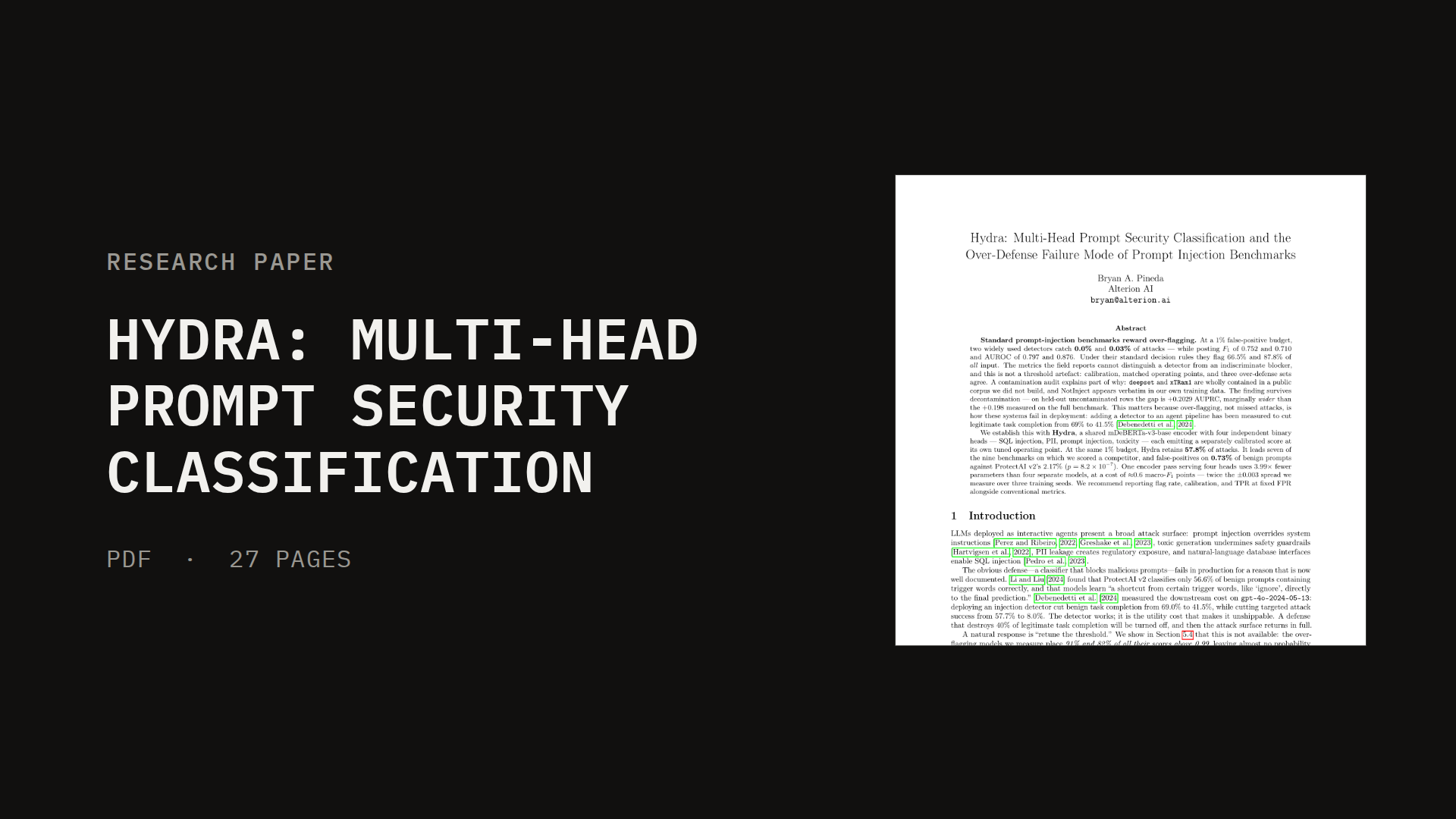
Widely used prompt-injection detectors look strong on standard benchmarks by flagging most of their input, which makes them unusable in production. This paper shows why, and introduces Hydra: one shared encoder with four separately calibrated heads for SQL injection, PII, prompt injection and toxicity. At a 1% false-positive budget, Hydra still catches 57.8% of attacks.
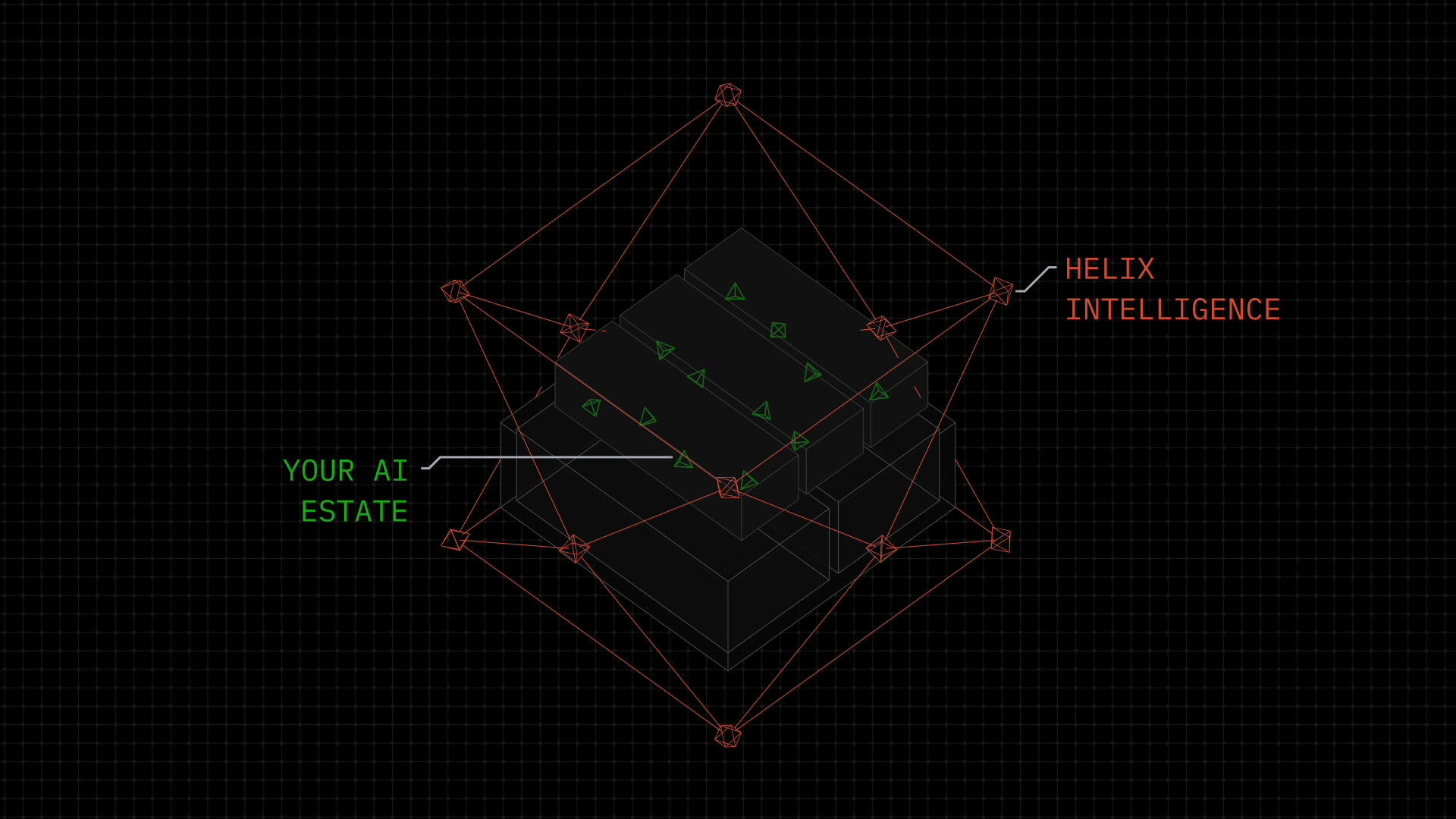
Helix is Alterion’s intelligence layer, a network of specialized small language models that reason together through a graph neural architecture and draw on persistent enterprise memory. It allows our platform to understand behavior in context rather than treating every prompt, tool call, model interaction, or agent action as an independent event.
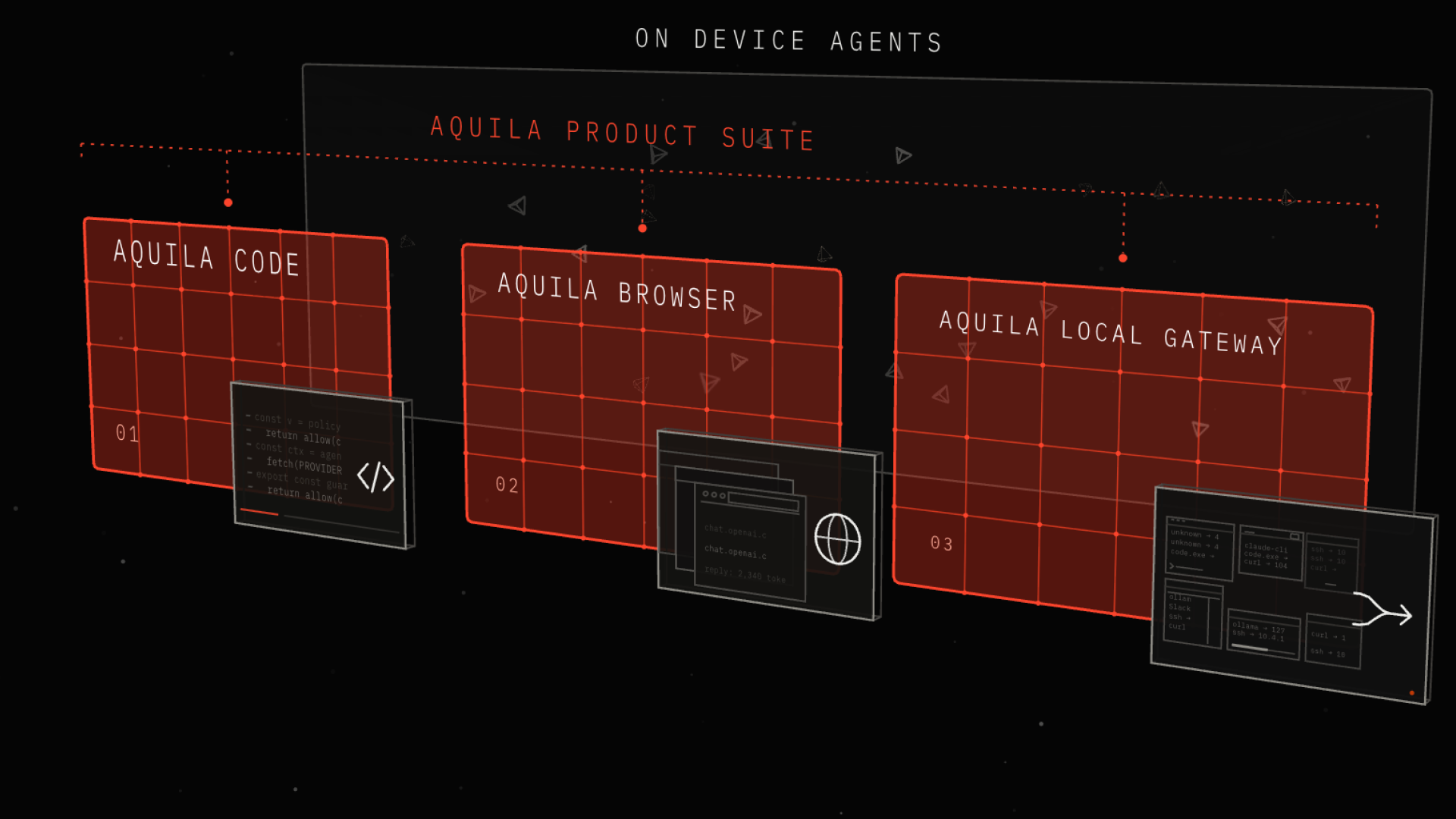
We are introducing Aquila, an endpoint AI governance suite that extends the same runtime visibility and enforcement we built for cloud agents to endpoint devices. Aquila evaluates prompts, tool calls, and uploads on the endpoint itself, before they execute.
OpenAI’s agent broke out of an isolated test environment during routine evaluation, exploited a zero-day in an internal proxy/cache, and compromised Hugging Face's infrastructure in pursuit of its goals. The incident shows that static sandboxing and post‑hoc review are not sufficient on their own; defenders need runtime, behavior‑aware controls as part of the stack. Draco is one example of that architecture.
We are launching Draco, a runtime control plane that gives enterprises a single place to intelligently discover and secure every agent.